Exactly how to Prepare the Base for a Resilient Interlocking Driveway Paving Installment
Most paver failures trace back to the base. Not the pavers themselves, not the polymeric sand, not also the installer's pattern selection. If the base clears up, the surface telegraphs every blunder. I as soon as reviewed a Driveway Paving Setup where the proprietors had actually picked stunning granite-textured pavers. The driveway looked best for 7 months, then the tire courses became superficial networks, the apron heaved after a freeze, and weeds colonized the joints. The perpetrator was not the stone or the staff's craftsmanship up leading, it was an underbuilt base laid over damp, silty dirt without geotextile. That task price two times to fix what it would have cost to do best once.
A solid base does 3 jobs: it spreads out tons so there is no factor stress on weak soils, it drains rapidly so freeze-thaw cycles do not jack the pavement around, and it stands up to activity at the sides and under wheels. If you get those three right, the visible surface has a tendency to stay limited and smooth for several years. The following is the approach I utilize for interlocking pavers on driveways and sidewalks when durability matters.
Start with the site and the soil
Before any individual touches a shovel, check out how water crosses the residential or commercial property and what the indigenous dirt holds under those initial couple of inches. I walk the site after a rainfall preferably. Low areas with standing water, moss development along sides, and black touches in the base of a lawn inform you where drain currently battles. For a Walkway Paving Installation, you can in some cases escape a lighter build since foot website traffic is mild, but water still manages the outcome. For a driveway, you have to think repetitive point tons, turning pressures, and snowplow abrasion.
Soil determines both how deep you need to dig and what you must separate from the granular base. Broadly:
- Sands and crushed rocks drain rapidly, hold form under load, and allow thinner areas. They can ravel under vibration if too loose.
- Silts and clays hold water, pump under lots, and increase when iced up. They require thicker sections and splitting up fabrics.
- Organics and fill are unforeseeable. If you see black, loamy product or layers of construction particles, over-excavate till you strike qualified subgrade.
When I probe with a screwdriver or a penetrometer, I am feeling for suppleness and moisture. If the device slides in greater than an inch or more with modest initiative, the dirt is likely weak when damp. In that situation, plan to go deeper and make use of geotextile. A fast, unrefined examination I use for prospective frost action is to round a handful of moist subsoil and drop it from midsection elevation. If it shatters, it is much more granular. If it slumps or sticks, you have a silty or clayey issue child.
Set elevations, qualities, and transitions
A successful base begins with lines and levels. You are forming a shallow, absorptive structure with specific top and lower planes. The leading plane, the paver surface, requires a regular crossfall so water moves off promptly. For driveways, target 2 percent incline, which is a quarter inch per foot. Walkways can work at 1 to 2 percent depending upon problems. Much less than 1 percent is requesting puddles. Greater than 3 percent on pavers becomes uncomfortable to stroll and brake on.
I set string lines or use a turning laser to develop surface altitudes at key points, after that function in reverse to determine base and subgrade midsts. If the paver density is 2.375 inches and the bed linen layer is one inch after compaction, and I want 8 inches of compacted base over a soft subgrade, my excavation target is about 11.5 to 12 inches below completed grade. Constantly offer on your own an extra half inch because loosened bed linens and small high spots in the subgrade eat margin fast.
Transitions to existing surface areas issue. At the garage, I aim for a flush entrance or a mild 1 inch drop so melting snow runs out, not under the door. At the street, check the municipal apron elevation and avoid creating a lip that catches plow blades. When pavers fulfill a concrete walk, plan for a tiny saw cut and a clean side restriction to lock everything together.
Choose the right base material
On most of my jobs, the base is a well rated crushed stone that locks under compaction. Regions call it different things, but the idea coincides. You desire a blend of angular aggregate dimensions from fines approximately three quarter inch or in some cases one inch, so the small fragments fill up deep spaces and the mass interlocks.
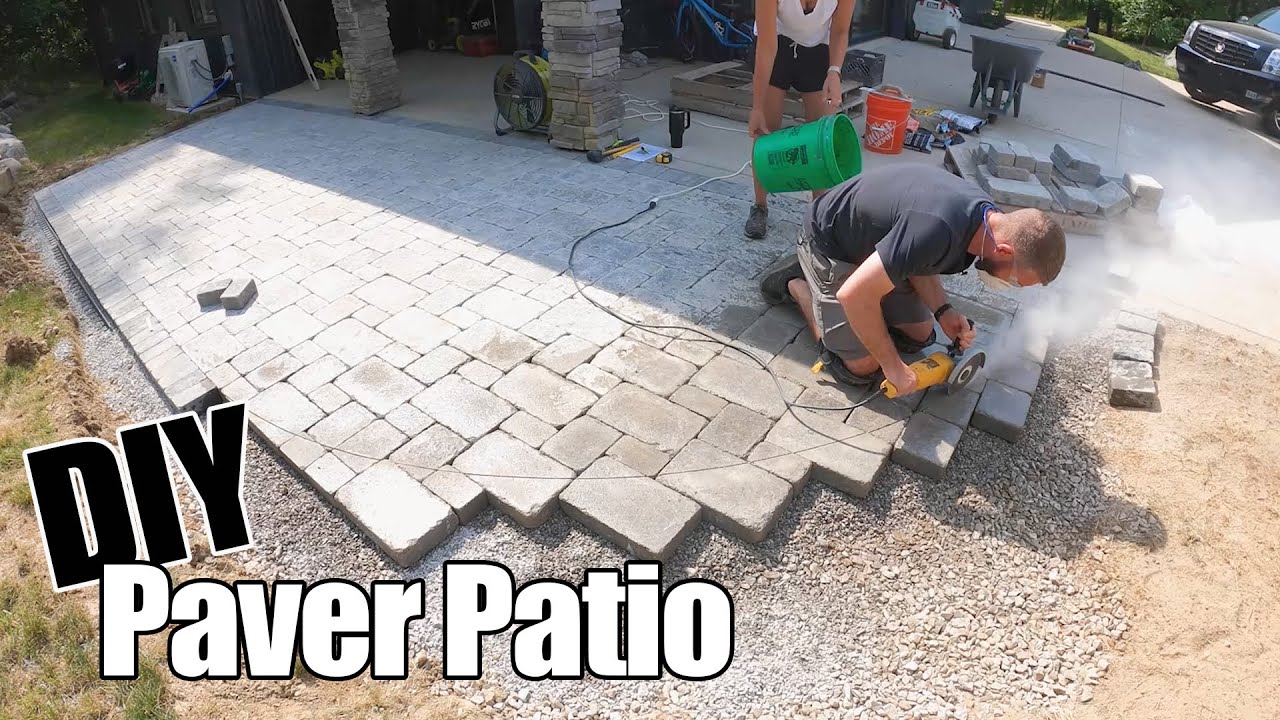
For domestic driveways in freeze environments, a normal section is 6 to 12 inches of compressed base over subgrade, thicker on clay and in cold areas. Walkways can be 4 to 8 inches, again depending on dirt. I hardly ever go below 8 inches on a driveway with clay subgrade. If a customer intends to park a RV or delivery trucks make regular gos to, 12 to 16 inches is appropriate.
Recycled concrete accumulation can work if it is tidy and well processed. It compacts wonderfully, but you need to make certain there is no rebar, gypsum, or lightweight garbage in the tons. I stay clear of pure sedimentary rock penalties as a bed linens training course, because they can hold water and migrate. Conserve the bed linen for a sharp concrete sand or a produced testing made for pavers.
Open rated base, the type with larger stone and few fines, has gotten popularity with permeable leading systems. It drains quickly and withstands frost heave by not holding water, but it calls for specific bedding layers and restrictions to stop particle movement. For a common interlocking Driveway Paving Setup, a thick rated base is more forgiving and easier to screed for novices.
The case for geotextile
Geotextile is inexpensive insurance policy. I make use of a nonwoven splitting up fabric over silty or clay subgrades and over any location where I think pumping under tons. The fabric rests directly on the prepared subgrade, after that the rock goes on top. Its work is not strength yet splitting up. Without it, fines migrate upward right into the base, and your compressed stone loses framework over time.
Choose a nonwoven material with sufficient slit resistance, usually defined by weight in ounces per square lawn and ASTM ratings. For driveways, I search in the 4 to 8 ounce variety depending upon dirt. The material should overlap 12 to 18 inches at seams and extend a little up the sides of the excavation to cover the base. I have actually pulled up fell short sections where the base looked like a layered cake of mud and stone. After substitute with fabric and a thicker base, the same site stood up for years.
Excavation and subgrade preparation
Excavate to your calculated depth and keep all-time low as level as practical with the intended slope. Remove organics, roots, and soft pockets till you hit consistent, strong material. If you dig deeper than intended in an area, do not backfill with topsoil. Bring the location up with the exact same base stone you plan to make use of and compact it in lifts.
Subgrade stamina is simple to overestimate. I run a plate compactor or a small roller over the subjected subgrade to tighten up the top half inch and place weak areas. If the subgrade rutting under compaction goes beyond a quarter inch, or if water pumps to the surface area, quit and readjust. On soft soils, including 2 to 4 inches of bigger graded stone as a linking layer under your base can stabilize things, specifically with fabric.
Never compact a waterlogged subgrade. Allow it dry to a moist, practical state. You can tarp locations to keep a rainfall off, or put down the material swiftly and include a sacrificial layer of rock to get devices onto the site without rutting. Work clever around utilities. If you subject a gas or water line, mark it and adjust compaction strategy near it. Hand tamping close to shallow lines stays clear of risk.
Placing and compacting the base
Compaction quality decides life expectancy. I use a relatively easy to fix plate compactor in the 400 to 700 pound class for most property work. On bigger driveways or where thickness surpasses 10 inches, a small dual drum roller saves time and provides much more uniform thickness. The trick is to construct the base in thin lifts, each compacted to rejection before the following goes down. I keep each lift to 3 inches loosened on thick rated stone. 4 inches is a tough limit on tiny plates. If you discard 8 inches at once, the top will look limited while all-time low continues to be loose, and the entire mass will clear up later under traffic.
Moisture is the various other fifty percent of compaction. Too dry and the penalties will certainly not rearrange. As well wet and the rock will pump. I go for a wet, awesome feeling when I press a handful. If dirt clouds billow under the compactor, haze the surface with a tube. If Click here for more water glistens and the plate leaves a film, let it drain or dry. 2 to four passes per lift, overlapped by half home plate width, are typical. On sides and tight corners, make use of a hand tamper or a smaller plate to avoid scarring.
On lengthy driveways, I run a straightedge or a string throughout the base every 6 to 8 feet. Inspect heights about your benchmarks. It is far simpler to cut or add rock at the base phase than to take care of elevations later with bed linens sand, which must disappear than an inch thick. I like to see no greater than a quarter inch of variant under a 10 foot straightedge at this stage.
Managing edges and restraints
Edge restriction maintains the pavers from creeping under wheels or frost. For driveways, I prefer concrete visuals or cast in position concrete haunches along the sides. Plastic side restrictions with long spikes can function, however they require a solid, compressed base and risks driven right into steady material, not right into loosened bed linens sand. Where the driveway fulfills a grass, a buried concrete side set simply below turf elevation offers a clean line and a lawn mower proof boundary.
At the street, a strengthened concrete apron or a row of soldier course pavers secured right into a concrete beam of light withstands rake blades and transforming forces. If you prepare to connect into an existing asphalt road, reduced a tidy edge and set up the restriction under the paver line so the interface stays limited. For a Walkway Paving Installation that meanders via a yard, a versatile plastic restriction is frequently sufficient, yet the base underneath still needs compaction out to the edge.
Bedding layer and why it is not a fixer for base errors
The bed linens layer exists to seat the pavers and permit tiny elevation modifications, not to level major waves. For standard pavers, use concrete sand with a regular rank or a produced bed linens material created for pavers. Screed rails set to the appropriate elevation guide a straightedge, and the loosened screeded layer should have to do with 1.25 inches before compaction of the pavers presses it to roughly one inch. If your base is off by half an inch, stand up to need to build that in bed linen. Pull the sand, readjust the base, after that re screed. Bedding that is as well thick actions under load and takes out of the joints under vacuum cleaner forces from traffic.
Dealing with water: drainpipe courses, textiles, and frost
Water discovers every path and penalizes shortcuts. A driveway base need to either lose water sideways quickly or move it downward into a complimentary draining layer that does not hold it near the freezing aircraft. On a standard dense rated base, cross incline and shoulder drainage are your allies. If the driveway beings in a bowl or if clay locks dampness in, consider a border drain or a French drainpipe covered in textile to bring water away. I have installed 4 inch perforated pipe along the low side of long drives, bedded in clean rock and covered in nonwoven fabric, daylighted to a lower elevation. The base stayed dry with spring thaws where neighbors' drives heaved.
In cold areas, the frost line determines care. The base does not require to visit frost deepness, yet it should protect against water from trapping. Avoid great materials near the bottom that hold dampness. If the dirt is frost susceptible, thicker base, geotextile splitting up, and possibly a layer of open rated rock beneath the thick base assistance. In really cool areas, a foam insulation layer at the sides near structures can manage differential heave, but that is a detail to design with care.
Load groups and sizing the base
Not all driveways see the very same misuse. A narrow single automobile run, lightly made use of by a portable auto, is various from a large court that holds delivery trucks and turn-arounds. I identify tons by axle weight and regularity. For common suburban use, 8 inches of compressed thick graded base executes well on decent subgrade. For frequent hefty tons, upsize to 12 inches and widen the compacted base past the paver edge by at least 6 inches to support transforming wheels. If there is a curb or a wall confining one side, think of wheel load focus and add density on that side.
When a customer asks if they can park a 9,000 pound recreational vehicle for weeks, I counsel 2 changes. First, rise base density and possibly change to an open rated base with correct restraints to reduce moisture under the call location. Second, expand the tons courses and, if budget plan enables, use thicker pavers ranked for automobile solution. The base still does the majority of the work, but the surface area thickness assists spread out load.
Quality control that pays back
Strong habits prevent do overs. I log compaction passes per lift, and if a plate seems to ride in a different way, I quit and inspect wetness. An evidence roll with a loaded vehicle serves on larger work. Drive gradually across the base and look for deflection. If the base deflects more than a quarter inch under a hefty axle, address it before moving on.
Measure, do not guess. A straightforward dirt probe or significant shovel helps maintain lift density honest. A straightedge made use of every few feet catches bulges and lows. Photograph layers for your documents, especially textiles and drains that go away under stone. If a section will certainly sit exposed to weather over night, crown it slightly and tarp if rainfall is anticipated. Saturated base can take paver driveway Walnut Creek days to recover.
Common mistakes and exactly how to stay clear of them
The worst mistakes repeat across work. Depending on bed linen sand to fix a curly base leads to rutting. Skipping geotextile over clay invites migration and pumping. Compacting thick lifts conserves time in the minute and expenses weeks later on when tire tracks show up. Overlooking water produces lifelong upkeep. Weak or missing edge restrictions allow pavers creep under transforming motions, especially near a garage where tires scrub while vehicle drivers guide at low speed.
There are also subtler mistakes. Eliminating way too much topsoil in a tight city front lawn can drop the driveway relative to the bordering pathway, producing an awkward lip. Puncturing a tree origin zone without a strategy can undercut a mature tree and welcome long-term negotiation as the roots decay. In those cases, bridge over origins with superficial excavation and a geogrid strengthened base, or change alignment.
Cost and time, with realistic ranges
Homeowners commonly ask what an appropriately constructed base prices. Material and labor differ by area, yet you can think in arrays per square foot for the base part alone. Dense graded stone provided runs in the variety of 30 to 60 dollars per bunch in several markets, and you require roughly 1.5 tons per cubic backyard. An 8 inch layer has to do with 0.67 cubic backyards per 100 square feet, so the stone alone might run 15 to 40 bucks per 100 square feet, before shipment and tax obligation. Include fabric at roughly 0.30 to 0.60 bucks per square foot. Tools, labor, and disposal of spoils press the set up base expense right into the 6 to 12 dollars per square foot range in numerous locations, occasionally much more in high price cities or tight sites.
Time relies on access, weather, and staff dimension. A two person team with a skid steer and a plate compactor can excavate and build base for 400 to 800 square feet of driveway in a couple of days, assuming typical deepness and excellent dirt. Include a day if you are working in clay or if trucking spoils off site includes a long haul. Do not hurry compaction to hit a schedule. I have actually stopped briefly tasks for a day to allow a rain drenched subgrade completely dry instead of pushing mud around and producing a future failure.
Environmental factors to consider without compromising performance
A well drained base can likewise be a responsible one. Recycled concrete aggregate, when sourced from a credible recycler, decreases demand for quarry stone and carries out well under compaction. Making use of an open rated base under absorptive pavers can recharge groundwater and ease drainage, but it needs thoughtful style of the subgrade and overflow approach. In cold regions, salt run is a concern. Great drainage and limited joints minimize pooling and the amount of deicer needed.
Spoils disposal offers another opportunity. Tidy topsoil and turf can often be recycled on site to regrade grass or construct growing beds. Rock surplus, if uncontaminated, can be conserved for future repairs or used under sheds or as a subbase for yard paths.
A practical series that works with real sites
- Walk the site, set grades, mark utilities, and define edges. Develop finish elevations and calculate excavation midsts from there.
- Excavate to depth, preserving slope, and remove organics. Condense the subgrade lightly and recognize weak points that need geotextile or connecting stone.
- Lay nonwoven geotextile where required, overlapping joints. Area base in lifts of 3 inches loose, portable each lift completely with moisture control.
- Shape the base to last grade with a straightedge, limited to within a quarter inch over 10 feet. Set up side restrictions on a compacted base, out bedding.
- Screed a one inch bedding layer of appropriate sand or produced product, then area and portable pavers, fill joints, and re compact.
That five action overview conceals a hundred micro choices, but if you strike each major factor easily, the information typically fall under place.
Special cases: high drives, clay basins, and tight city lots
Steep driveways challenge grip throughout building and solution. I restrict lift thickness a lot more on slopes, and I orient compaction passes vertical to the fall where secure. Side restrictions need additional interest, usually concrete, and go across slope needs to not surpass what is comfortable for cars to go across without bottoming. On long, steep runs, break water with landing areas if the building allows, so water speed does not erode joints.
Clay basins, the timeless dish shaped front backyard where water sits after tornados, determine an aggressive drain strategy. I have cut a shallow trench along the low edge, covered perforated pipeline in material and tidy stone, and linked it to a dry well or to the storm system where legal. The trick is to give water a reputable exit that does not undermine the base.
Tight whole lots bring spoil administration and hosting migraines. When street parking is limited and you have no space for a stone pile, timetable deliveries in smaller loads timed to compaction progress. Usage plywood or ground security mats to secure neighbors' lawns and stay clear of turning the job into a polite problem.
Verifying success before any type of paver touches the ground
A completed base should seem like strolling on concrete. Your boot should not damage the surface area. A 10 foot straightedge must expose only little, steady variants. Water from a hose need to run continually to the created low side without pooling. If you have the persistence, leave the base revealed for a day of website traffic from a crammed pick-up or a little dump truck. Expect ruts. If the base brushes off that trial, it is ready.
I typically welcome the homeowner to stroll it with me at this stage. When they feel exactly how strong it is and see the specific form, they understand where their money went. The pavers they chose will look good whatever, however only a well prepared base will certainly make them look good for a decade.
A short troubleshooting checklist for base preparation
- Tire tracks or ruts show up during compaction: decrease lift density, readjust wetness, and think about geotextile over the subgrade.
- Base looks tight yet pumps water at the surface area: pause, allow it drain, and include a connecting layer of larger rock if needed.
- Elevations wander along the run: reset a couple of string line benchmarks and examine every 8 feet with a straightedge, correcting at the base, not in bedding.
- Edges really feel soft near restraints: expand the compacted base beyond the paver line and re compact with added passes, then reset the restriction on the rock, not on sand.
- Water swimming pools at the low end after a pipe examination: change cross slope and add or unblock drainpipe courses prior to proceeding.
Bringing all of it together for sturdy paver work
Interlocking pavers are forgiving at the surface area. You can replace a discolored piece, change a pattern, or re sand a joint in a mid-day. The base is not so forgiving. It specifies the feel underfoot and under tire for the life of the installation. Approach it with the very same treatment a carpenter offers to a structure. Strategy the qualities, understand the dirt, different weak material with fabric, small in sincere lifts with moisture control, and secure the edges. That frame of mind uses across both Driveway Paving Setup and Walkway Paving Installation. The difference is primarily in thickness and restriction, not in the principles. Construct the base as if you will certainly drive a vehicle on it before you ever before established a paver, and the completed surface area will thanks every period that passes.